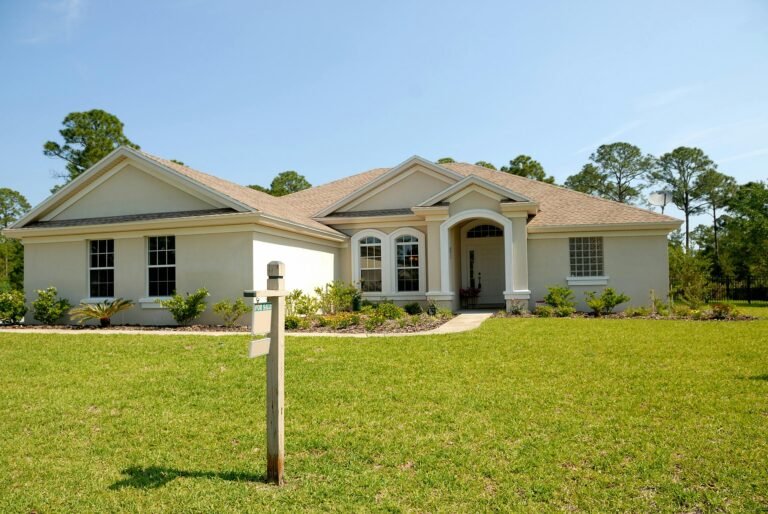

Facing Foreclosure After Divorce: What You Need to Know
Divorce is one of the most emotionally and financially difficult experiences a person can go through. When you add the threat of foreclosure after divorce into the mix, the stress can feel unbearable. You’re not alone — and you’re not without options. Every year, thousands of homeowners find themselves struggling to keep up with a mortgage that was once shared between two incomes. Whether your divorce is recent or finalized years ago, understanding your rights, responsibilities, and available paths forward is the first step toward protecting your home, your credit, and your peace of mind.
This guide walks you through everything you need to know about navigating foreclosure during or after a divorce — with compassion, clarity, and actionable steps you can take today.
If you’re dealing with this right now and need immediate help, you can find free foreclosure assistance programs, housing counselors, and legal resources here:
Get Help With Foreclosure
Table of Contents
Why Divorce Is One of the Leading Causes of Foreclosure
It’s no secret that divorce reshapes every aspect of your financial life. A household that once relied on two incomes to cover the mortgage, utilities, insurance, and taxes is suddenly expected to manage those same obligations on one. Studies consistently show that divorce is among the top triggers for mortgage default and eventual foreclosure.
Here are some of the most common reasons foreclosure after divorce occurs:
- Reduced household income: One salary often can’t cover a mortgage designed for two.
- Confusion over responsibility: Both spouses may assume the other is making payments during or after separation.
- Emotional paralysis: The overwhelming nature of divorce can cause people to avoid dealing with financial obligations.
- Court order delays: Divorce proceedings can drag on for months or years, leaving mortgage payments in limbo.
- Spite or neglect: In contentious divorces, one party may intentionally stop contributing to the mortgage.
Understanding why this happens is important because it removes the shame. This is not a personal failure — it’s a systemic financial challenge that millions of people face.
Who Is Responsible for the Mortgage After Divorce?
This is the single most misunderstood aspect of foreclosure after divorce. Many people assume that once a divorce decree assigns the home to one spouse, the other is free from all mortgage obligations. That is not how it works.
The Divorce Decree vs. the Mortgage Contract
Your divorce decree is a court order between you and your ex-spouse. Your mortgage is a legally binding contract between you (the borrowers) and your lender. These are two entirely separate legal agreements, and a divorce decree does not modify or override your mortgage contract.
This means:
- If both names are on the mortgage, both parties remain legally responsible for the debt — regardless of what the divorce decree says.
- If your ex-spouse is awarded the home but fails to make payments, your credit will be damaged too.
- The lender can pursue either or both borrowers for the outstanding balance.
This is why it’s critical to address the mortgage directly during divorce proceedings — not just in the property settlement, but with the lender itself. Learn more about how missed payments affect you in our guide on how foreclosure affects your credit score.
What If Only One Spouse Is on the Mortgage?
If only one spouse signed the mortgage note, only that person is legally obligated to repay the loan. However, both spouses may still have an ownership interest in the property — especially in community property states like California and Texas. Ownership and debt obligation are separate legal concepts, and both matter when dealing with foreclosure.
Your Options When One Spouse Leaves the Home
When one spouse moves out during or after a divorce, the remaining spouse is left in a difficult position. Here are the most common paths forward — each with distinct advantages and drawbacks.
Option 1: Refinance the Mortgage in One Name
Refinancing allows the spouse keeping the home to take out a new mortgage solely in their name, releasing the departing spouse from all financial liability. This is often the cleanest solution for foreclosure after divorce, but it requires:
- Sufficient individual income to qualify
- Adequate credit score
- Enough equity in the home
If you can’t qualify for a refinance right now, a loan modification might be an alternative worth exploring with your servicer.
Option 2: Loan Assumption
Some mortgage types — particularly FHA, VA, and USDA loans — allow for a loan assumption if you find yourself undergoing a foreclosure after divorce, where one spouse formally takes over the existing mortgage. This avoids the need to refinance entirely and can preserve favorable interest rates. Contact your loan servicer to find out if your mortgage is assumable.
Option 3: Sell the Home
Selling the home and splitting the proceeds is often the simplest way to make a clean financial break. If you owe more than the home is worth (an “underwater” mortgage), you may need to pursue a short sale, which allows you to sell for less than the outstanding loan balance with your lender’s approval.
Option 4: Deed in Lieu of Foreclosure
If selling isn’t viable and neither spouse can afford the payments, a deed in lieu of foreclosure may be an option. This involves voluntarily transferring ownership of the property to the lender in exchange for release from the mortgage debt. While it still impacts your credit, it’s generally less damaging than a full foreclosure.
Option 5: Keep the Home Jointly (Temporarily)
In some cases, divorcing couples agree to maintain joint ownership for a set period — for example, until children finish school or until the housing market improves. This requires a high level of cooperation and a clear written agreement about who pays what and when the property will eventually be sold or transferred.
How to Protect Your Credit During a Divorce
Your credit score doesn’t care about the details of your divorce — it only reflects whether payments are made on time. Here’s how to protect yourself:
- Monitor your credit reports regularly. Check all three bureaus (Experian, Equifax, TransUnion) for any missed payments on joint accounts.
- Communicate with your lender early. If you anticipate difficulty making payments, don’t wait. Contact your mortgage servicer to discuss forbearance or loan modification options.
- Don’t assume your ex is paying. Even if the divorce decree assigns the mortgage to your ex, verify that payments are being made on time. Set up account alerts if possible.
- Document everything. Keep records of all payments you make, all communications with your ex about the mortgage, and all correspondence with your lender.
- Consider making payments yourself if your ex defaults. It may feel unfair, but protecting your credit now can save you thousands of dollars in higher interest rates down the road.
If this feels overwhelming, you don’t have to figure it out alone. You can find free, legitimate foreclosure help (including HUD counselors and state programs) here:
Find Foreclosure Help Near You
Legal Considerations You Shouldn’t Overlook
Navigating foreclosure after divorce involves overlapping areas of family law, real estate law, and consumer finance law. Here are critical legal factors to keep in mind:
Community Property vs. Common Law States
In community property states (including California, Texas, and several others), both spouses generally share equal ownership of assets and debts acquired during the marriage — even if only one name is on the mortgage. In common law states, property ownership is determined by whose name is on the title or deed.
Understanding which rules apply in your state is essential for determining your rights and obligations. Visit our state resources for Florida or check your state’s specific page for localized guidance.
Quitclaim Deeds Don’t Release Mortgage Liability
A common and dangerous misconception: signing a quitclaim deed transfers your ownership interest in the property, but it does not remove your name from the mortgage. You can give away all rights to the home and still be 100% liable for the debt. Never sign a quitclaim deed without also addressing the mortgage note — ideally through refinancing or loan assumption.
Get Legal and Financial Counsel
If you’re dealing with both divorce and potential foreclosure, working with both a family law attorney and a HUD-approved housing counselor is strongly recommended. Housing counselors can help you understand your options at no cost. You can find one through the U.S. Department of Housing and Urban Development (HUD) counseling directory.
If You’ve Already Received a Notice of Default
If you’ve already fallen behind on payments and received a notice of default, don’t panic — but do act quickly. Time is your most valuable resource at this stage. A notice of default is the beginning of the formal foreclosure process, and you typically have a window of time to respond before the situation escalates.
Read our detailed guide on what to do after receiving a notice of default for a step-by-step action plan. And remember: it is possible to stop foreclosure, even after proceedings have begun.
Emotional Support: You Deserve Help Beyond the Legal and Financial
We’d be remiss not to acknowledge the emotional weight of what you’re going through. Facing foreclosure after divorce means grieving a relationship, potentially losing your home, worrying about your children, and dealing with financial uncertainty — all at the same time. That is an enormous amount of stress for any human being.
Please consider reaching out for support:
- Therapy or counseling: Many therapists specialize in divorce and financial stress. If cost is a concern, look for sliding-scale providers or community mental health centers.
- Support groups: Both online and in-person groups exist for people going through divorce, foreclosure, or both. Sharing your experience with others who understand can be profoundly healing.
- Trusted friends and family: Don’t isolate yourself. Let people in your life know what you’re dealing with. You may be surprised by how much support is available when you ask.
- Crisis resources: If you’re feeling overwhelmed, the 988 Suicide and Crisis Lifeline is available 24/7 by calling or texting 988.
Taking care of your mental health isn’t separate from solving your housing crisis — it’s foundational to it. You’ll make better decisions, advocate more effectively for yourself, and find more strength to move forward when you’re not carrying the weight alone.
Frequently Asked Questions About Foreclosure After Divorce
Should I keep paying the mortgage even if I moved out?
It depends on your specific situation, but in many cases, yes — at least until your name is removed from the mortgage. If your ex stops paying and the loan goes into default, your credit will suffer and the lender can pursue you for the debt. Making payments on a home you no longer live in is understandably frustrating, but it may be the smartest financial move to protect your long-term creditworthiness. Consult with a housing counselor or attorney to evaluate the best strategy for your circumstances.
Can I force my ex-spouse to refinance or sell the home?
If your divorce decree includes a provision requiring your ex to refinance by a certain date or sell the property, you can petition the family court to enforce that order. However, courts cannot force a lender to approve a refinance — they can only compel your ex to attempt it. If refinancing isn’t possible, the court may order a sale instead. Working with a family law attorney who understands the intersection of divorce and real estate is invaluable in these situations.
What happens to the house if neither spouse can afford the mortgage?
If neither party can afford to maintain the mortgage, the most common options are selling the home (either through a traditional sale or a short sale), pursuing a deed in lieu of foreclosure, or negotiating a loan modification with your lender to reduce payments to an affordable level. Doing nothing and allowing the home to go into foreclosure should be a last resort, as it carries the most severe consequences for both parties’ credit and financial futures.
Does a divorce decree remove my name from the mortgage?
No. A divorce decree is an agreement between you and your ex-spouse, enforced by the family court. It does not change the terms of your mortgage contract with your lender. Even if the decree orders your ex to make all mortgage payments and awards them the home, you remain fully liable on the loan until your name is formally removed through a refinance, assumption, or payoff. This is one of the most critical things to understand about foreclosure after divorce.
Can my ex-spouse’s failure to pay the mortgage affect my credit?
Yes, absolutely. If both of your names are on the mortgage, any missed or late payments will appear on both of your credit reports — regardless of what your divorce decree says. The lender reports payment activity for all borrowers on the loan. The only way to fully protect yourself is to have your name removed from the mortgage through refinancing, loan assumption, or paying off the loan entirely (such as through a sale).
Take the Next Step — You Have More Options Than You Think
Foreclosure after divorce is daunting, but it is not inevitable. Whether you’re just beginning to worry about missed payments or you’ve already received legal notices, there are concrete steps you can take right now to protect yourself:
- Contact your mortgage servicer to discuss hardship options.
- Speak with a HUD-approved housing counselor at hud.gov/counseling — it’s free.
- Consult with a family law attorney who has experience with real estate issues in divorce.
- Explore our resources — start with our guide on how to stop foreclosure for a complete overview of your options.
You’ve already taken the hardest step: looking for answers. Now keep going. Your future self will thank you. If you’re ready to take the next step, you can get connected with foreclosure assistance resources here:
Disclaimer: The information provided on ForeclosureShield.com is for educational and informational purposes only and does not constitute legal, financial, or tax advice. Laws, deadlines, and assistance programs vary by state and change over time, and every homeowner’s situation is different. Always verify details and seek guidance specific to your circumstances from a HUD-approved housing counselor, a licensed attorney in your state, or a qualified financial or tax advisor. ForeclosureShield.com is not affiliated with any government agency, lender, or credit bureau. If you are in immediate danger of foreclosure, call the HUD hotline at 1-800-569-4287.